
- Details
- Category: Blog
- Hits: 1778
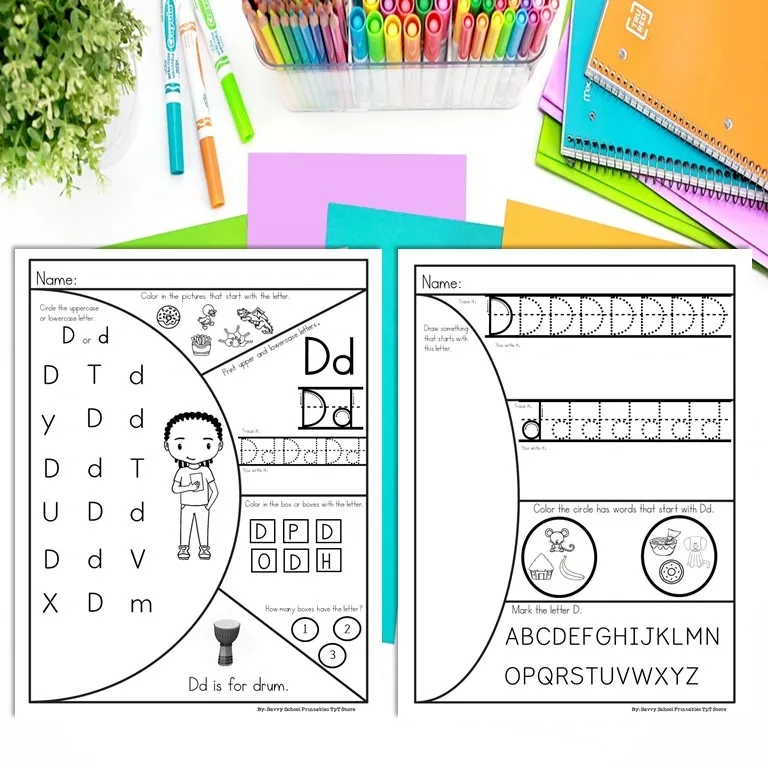
Worksheets for Letter A and Beyond is a fun and functional resource that will help your students learn to write the letters of the alphabet and connect the letters to different sounds and words. Each letter of the alphabet comes with two different worksheets. These worksheets are great for introducing kids to their letters either for the first time or as a review.
The first worksheet in each pair focuses on letter recognition. It shows what the letter looks like and includes pictures of objects that start with that same letter as well as a letter recognition activity. The second worksheet of the pair is designed for practice, where students trace over the letter in order to learn its shape. Once they have become familiar with and practiced tracing the uppercase and lowercase versions of each letter, there is space for students to practice writing that letter without tracing it.
These worksheets will allow your students to learn to read, write, and pronounce letters in a fun way and at their own pace without the boring, repetitive process of writing line after line. The pictures shown for each word help tremendously in connecting the letter and the sound it makes with words they already hear in their everyday life.
To snag these awesome alphabet worksheets to use at home or in your classroom, click here. Worksheets for Letter A and Beyond is an invaluable tool that will help make teaching your students phonics more fun and easy than ever!


- Details
- Category: Blog
- Hits: 1812
Mindful Coloring is an enjoyable activity that teachers can implement in the classroom to improve student engagement, mindfulness and focus. It can be done as an activity for the whole class, in centers, with small groups, or by an individual student. Mindful coloring is often thought of as a calming tool, but it also has numerous benefits for academic and social-emotional learning.
Benefits of Mindful Coloring
- Mindful Coloring for Processing Experiences - Mindful coloring can be done as a whole class activity alongside conversations about academic or social emotional topics. Classrooms tend to be fast-based and busy places, and mindful coloring opportunities can help students to slow down and take the time to think about and process the topics that are being discussed. This strategy would also work in small groups or in centers. Because mindful coloring is calming and provides a place to focus, it can also help students to listen and respond thoughtfully when working one on one with an adult.
- Mindful Coloring for ELL students - Mindful coloring can be beneficial to English Language Learners who are learning to communicate in a new language with teachers and peers. Encouraging students to have casual conversations while they are doing mindful coloring can help ELL students develop their vocabularies and become more confident as they practice speaking and listening.
- Mindful Coloring for Confidence - Mindful coloring benefits students by providing a creative outlet with a tangible physical reward at the end that no specific talent or skill are needed to create. Creating beautiful artwork helps to build confidence and gives students the opportunity to represent themselves in a unique way. This is beneficial for all students, but it can be especially beneficial for people who find it difficult to express themselves verbally or in writing.
Implementing Mindful Coloring
Implementing mindful coloring is easy because it only requires gathering coloring supplies, printing coloring sheets, and scheduling in time during the school day. Modeling the process and expectations with students before you begin will ensure that students know what mindful coloring should look like in your classroom and will set everyone up for a positive experience.
Click here for mindful coloring sheets that your students will love.


- Details
- Category: Blog
- Hits: 2968
Learning sight words is an essential step towards learning to read. Once students are familiar with sight words, it’s important for them to practice them frequently, so that they can identify the words quickly and easily. Playing Sight Word Bingo is a fantastic way to get students excited about practicing and improving the speed with which they recognize each sight word.
How to Play Sight Word Bingo:
- Cut and laminate enough bingo cards for your class. (The list includes 5 board variations.)
- Print the teacher cards and cut them out.
- Give each student a bingo card.
- Provide students with bingo chips, daubers, etc. for marking answers.
- Randomly pull a word card, say the sight word.
- Students cover the word if it is on their board.
- Pick any variation of bingo to determine the winner (black out, four corners, traditional, etc.)
Modifying Bingo
Bingo is easy to modify for students that need additional support or an extra challenge. Teachers could include pictures on the bingo chart to help students that need additional support. To provide an extra challenge for students that are ready for it, teachers could have students write the sight words on their cards themselves.
Bingo as a Formative Assessment
Teachers can also use bingo as an informal formative assessment tool. To do this, a teacher would call out a sight word and watch which students are able to mark the word on their bingo card. Then, they would write the word on the board and watch to see which students mark their board after they have seen it written. By taking note of which students wait to see the word on the board before marking their cards, the teacher will have additional data to inform small group instruction or during child study meetings.
Sight Word Bingo Set
Playing Sight Word Bingo is a fun and easy way for teachers to get everyone in the class excited about learning. The time spent playing will provide extra practice and build your students’ confidence with sight words. To get started, click here for a colorful and creative Sight Word Bingo Set that includes 5 variations and a Kindergarten sight word list.

We also have a workbook where you can just cut out the color pages to play.
Enjoy the game!

- Details
- Category: Blog
- Hits: 2125
Building fluency in all grades is important, but it’s especially critical in 3rd grade. By the time students reach 3rd grade, they should ideally have acquired the skills and confidence to read independently. This is also the year that testing expectations shift from tests being read aloud to students to students reading and completing their tests independently. This transition tends to be very challenging for students, which is why continuing to build fluency is so significant in 3rd grade.
What is Fluency & What Does Fluency Tell Us?
Fluency refers to the quality of the reading a person is doing. Students that struggle with fluency may read very slowly, make a lot of mistakes or lack expression when they read aloud. A student is proficient in fluency if their reading is smooth and they make little to no errors when reading. Fluency screeners give teachers insight into how fluency could be inhibiting a student’s reading comprehension and help teachers to pinpoint which skills need additional instruction or practice.
Activities to Improve Fluency
- A great time to check-in and practice fluency with students one-on-one is when the whole class is engaged in reading or doing independent work. Teachers can meet with students individually and listen to them “whisper read” for 3-5 minutes at a time. This provides the opportunity for beneficial practice, informal assessment and feedback in a very short period of time.
- Center time also provides an additional opportunity for teachers to focus on fluency. The teacher can select fluency passages at the appropriate level for each student and check-in with each student briefly. At that check-in, each student will read through their passage while the teacher takes a running record. This provides practice for the student as well as important data the teacher can use to structure future instruction.
It’s important for teachers to build time for fluency practice into the school day because continuous practice and teacher feedback are the keys to improving reading fluency. The time invested in building fluency will benefit your students both in 3rd grade and beyond. Click here to find resources to use for fluency practice with your students.


- Details
- Category: Blog
- Hits: 2327
What are Vowel Teams?
Vowel Teams are two side-by-side vowels that come together to make one sound. Examples of vowel teams are /ea/ in the word eat and /ie/ in the word pie. Unfortunately vowel teams don’t always represent the same sound in every word, which can make them tricky, especially for early readers. For example, /ea/ can have the long e sound like in the word eat. But it can also represent different sounds like in the words head and break.
Why Should You Teach Vowel Teams?
Students will need to have a general understanding of short vowel sounds and long vowel sounds before being introduced to vowel teams, because vowel teams add an extra level of complexity. Once students have been taught about vowel teams and have learned examples of common words that contain them, their reading fluency will improve significantly.
Learning vowel teams can also help to reduce spelling errors. This is because students that understand vowel teams have a better understanding of short vowel sounds, long vowel sounds and the unique sounds produced by common vowel teams. This connection between the sounds and the letter combination helps students to spell more accurately based on how a word sounds.
Understanding Vowel Teams
Vowel teams are considered digraphs because 2 letters produce one sound. Some vowel teams are considered diphthongs, since 2 vowels with their own sounds are combined to form a new sound. For example /oi/ in the word boil.
A common phrase that teachers use when talking about vowel teams is “when two vowels go out walking, the first one does the talking.” While this is catchy it can be damaging to vowel teams overall, because it is often not true and can lead to mistakes and confusion.
3 Tips for Teaching Vowel Teams
- Have a separate visual of the most common words that include tricky vowel sounds. Make sure it’s easy for students to see, so they can reference it as needed. Reinforcement and practice are crucial to helping your students to master vowel teams.
- Make practicing fun! Set up a magnet spelling station with your vowel team words. This gives students hands-on practice building, spelling and reading words that contain vowel teams.
- Pause and point out vowel teams when reading aloud to the class. Making the connection between the words learned individually and finding them in engaging text makes learning relevant and more memorable.
Bonus Tip! Practice vowel teams on paper with worksheets that include the images associated with the words. These images are especially helpful for young learners because they tend to know the pronunciation and meaning of many more words than they can read or spell. Associating familiar images to the words on paper, creates additional opportunities for students to make important connections and increase their reading vocabulary.
I've got something that could help with this.
These printables are designed specifically to help your students practice vowel teams! Enjoy.